| Blue spruce Pinaceae Picea pungens |
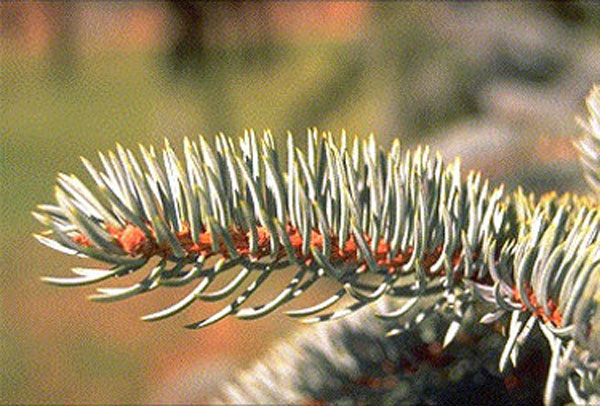
The leaves are evergreen, 3/4 to 1 1/4 inches (2 to 3 cm) long, 4-sided
needles that are dull green to silvery-blue. Cones are orange (male) or
greenish (female). Blue spruce pollen is wind borne. Twigs become
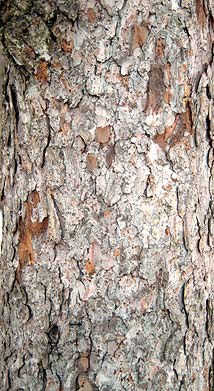
orange-brown with age. The bark is gray and composed of thin, loosely
attached scales.
Identification: Leaf: Evergreen, stiff, 3/4 to 1 1/4 inch long, yellow-green to
bluish or white. Needles are very sharp, with acidic taste.
Flower: Monoecious; males yellow-brown to purple, scattered throughout
trees; females purple, upright, in tops of the trees.
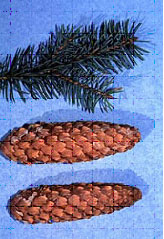
Fruit: Cones are 2 to 4 inches long, cylindrical, light brown in color; scales
are pointed with jagged-erose margins. Maturing in autumn.
Twig: Stout, hairless, orange-brown. Needles are borne on woody pegs. Bud
scales are noticeably reflexed.
Bark: Gray to red-brown, young trees with small, thin scales - older trees
developing furrows.
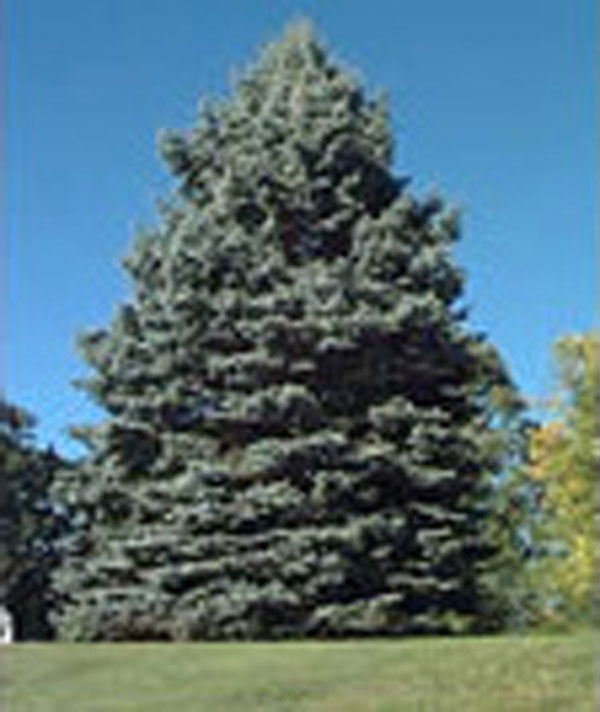
Form: A medium to large tree with pyramidal form. Branches appear layered.
Habitat/ Range: The blue Spruce can be found through the Rocky
Mountains, north to Colorado, and in some parks in the east.