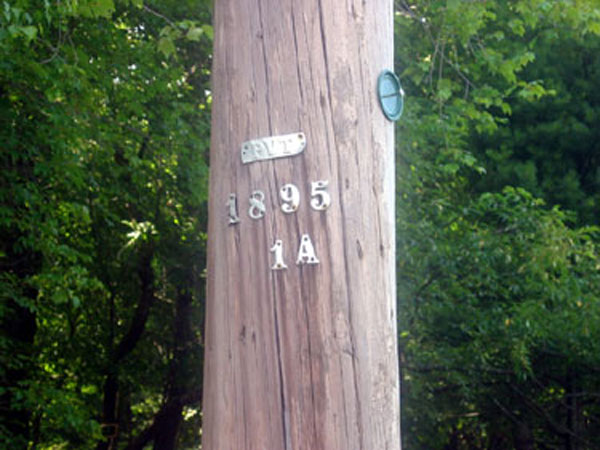
| Pole Tree |
Once selected for poles, trees are felled, limbed and cut to proper length.
At the peeling yard, the outer bark and protruding knots are peeled with a
roughing head. A finishing head smoothes it, leaving a good shell of sapwood
for treatment. After the pole is peeled, it is classified for length and class size.
An inspector measures the pole's circumference six feet from the butt, and at
the tip. All poles most conform to the American National Standards Institute
(ANSI) and Canadian Standards Association (CSA) for knots, straightness,
spiral grain, and other properties.
The inspected poles are stacked with similar sized poles to season in the storage deck. The
climate of the area where the poles are stored determines the length of air seasoning. Air or
kiln drying substantially reduces seasoning checks that might occur after being installed and
exposes untreated wood.
Poles with acceptable moisture content are selected for treatment. The pole is then incised, or
perforated, to proper depth in the ground line area for additional penetration and retention of
preservative in this area susceptible to decay.
climate of the area where the poles are stored determines the length of air seasoning. Air or
kiln drying substantially reduces seasoning checks that might occur after being installed and
exposes untreated wood.
Poles with acceptable moisture content are selected for treatment. The pole is then incised, or
perforated, to proper depth in the ground line area for additional penetration and retention of
preservative in this area susceptible to decay.